A Quiet Hike With a Purpose
Some meals feel special because of the effort behind them, not because the recipe is complicated. This trout dinner came together after Alexander and I spent a slow afternoon walking near the lake, watching the forest edge for anything useful. Ramps were coming up in damp patches, and we found a few tender wild greens that looked good enough to toss into dinner.
As an environmental educator, I like meals that remind me where food comes from. Foraging with Alexander is a practical way to teach him attention, respect for the land, and patience. We only take what we can use, and we try to leave the place as calm as we found it. 🌿
Cleaning and Seasoning the Trout
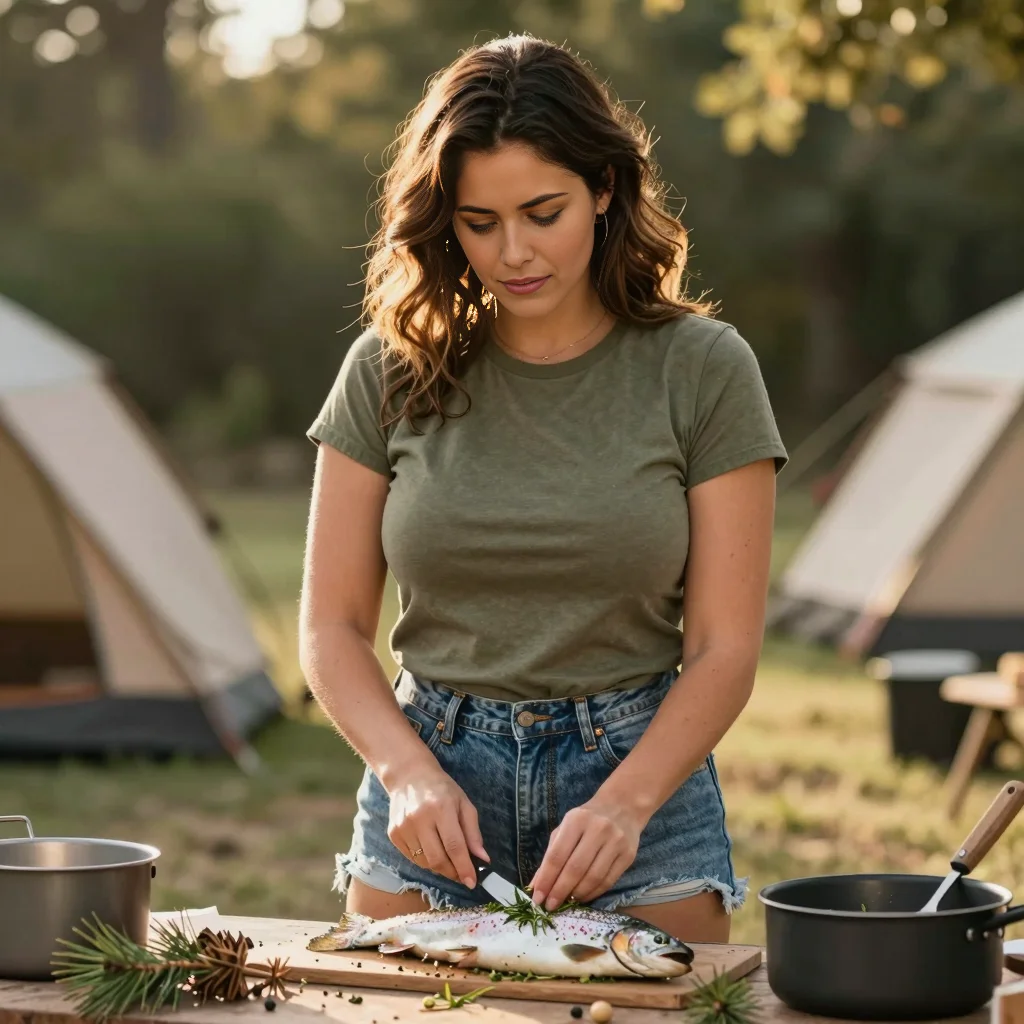
Back at camp, we cleaned the trout and patted it dry. I kept the seasoning simple: salt, pepper, and a little oil. Then we tucked chopped ramps into the cavity so the fish would pick up that bright, oniony flavor while it cooked.
This is the part of camp cooking I enjoy most. There is no rushing, no clutter, just a small stove, a pan, and ingredients that were gathered a little while earlier.
Searing It Over the Camp Stove
I heated the pan until it was steady and hot, then laid the trout in carefully. It needs about four minutes on each side, depending on size, until the skin is golden and the flesh flakes easily. The ramps soften inside, and the smell is enough to make even a quiet campsite feel lively.
Alexander watched the pan closely, asking when it would be ready. I told him to listen for the sound to settle and watch the edges turn opaque. Camp food teaches you to use your senses, not just a timer.

Serving It Simple
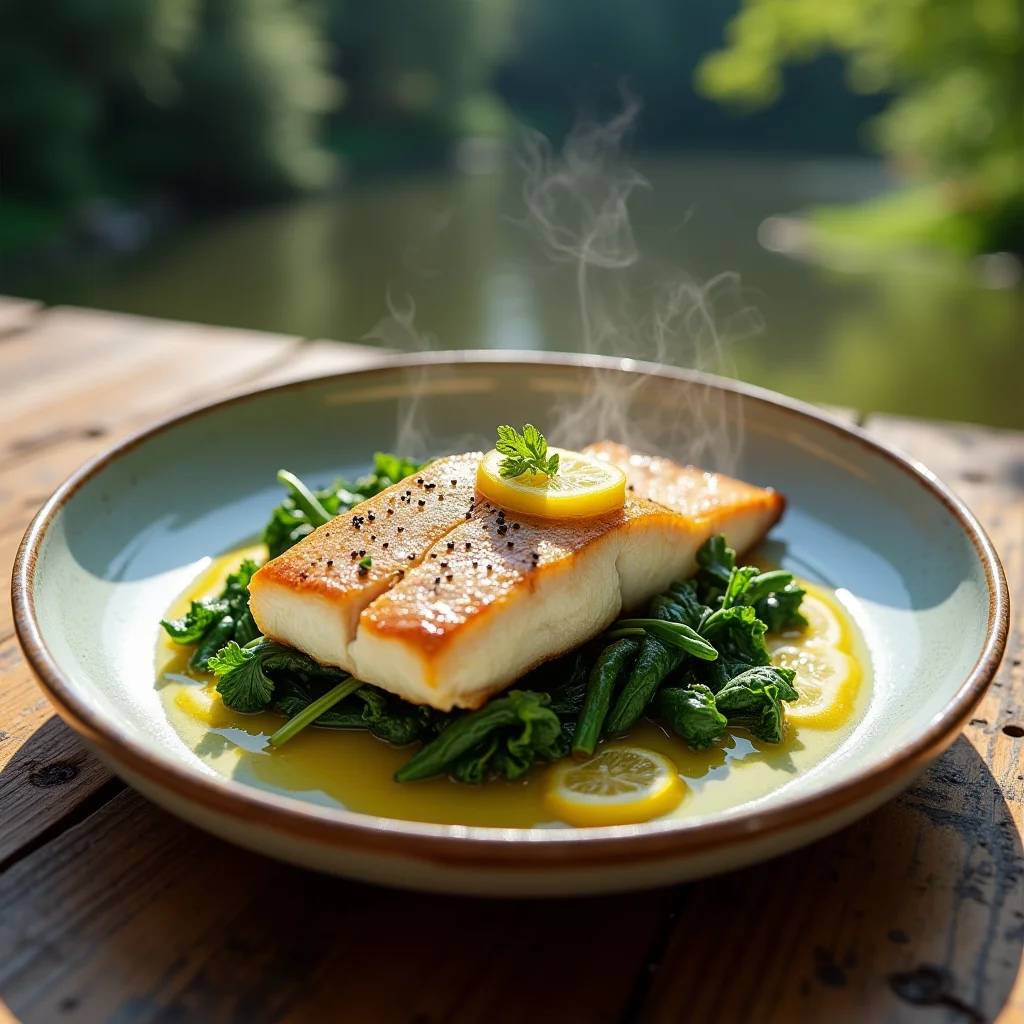
We served the trout over a mix of foraged greens dressed with lemon juice. The heat from the fish barely wilts the leaves, which keeps them fresh and a little wild tasting. The whole meal feels clean, practical, and satisfying.
It is not fancy, but it tastes like the place we were in. That is usually what I want from a meal outdoors.